Showing posts with label books. Show all posts

Monday, July 11, 2016

Alexander Hamilton: Before We Rapped We Read

Hamilton with his nemesis Burr

Every year on January 11th, or, if that glorious day falls on a weekend, the nearest weekday, I read just one book to every class at Alexander Hamilton Elementary School, "Duel! Burr and Hamilton's Deadly War of Words", by Chicago author Dennis Brindell Fradin (sadly attempts to lure him to Hamilton School have been unsuccessful). January 11th, Hamilton's birthday, is celebrated with great gusto at his namesake school, in fact the founding father himself has visited almost every year (quite confusing to some younger children who were almost certain that he was dead).

Before there was a healthy school, there were cupcakes for every child, and a school wide birthday sing along lead by the choir or the music teacher or a willing guy with a guitar (thankfully for my children this celebratory task was never assigned to me). My self designated role on the greatest day of the year has always been to read about Hamilton and to talk about his accomplishments and his shortcomings. To remind children that while what he might be most well known for, until recently, was his tragic death, that his list of achievements is long, and often overlooked.

Three things that students are expected to know:

1. He was never, ever a President,
2. But he was the first Secretary of the Treasury, and
3. His face is on the $10 bill; one of only two men to never serve as President honored in this way.

Older students get to listen to me blather on about his leadership in the creation of our system of finance (and his advocacy for reasonable public debt), his want of a strong Federal government, his role in the compromise to unify the states and locate the new capital in northern Virginia, and his mad writing skills, most notably found in that page turner, The Federalist Papers.

We do not discuss his indiscretions, poor decision making skills or Maria Reynolds.

Talking with children about history is fun and interesting. When you create stories, rather than facts, it's engaging. Of course when you create awe inspiring musicals that sing, dance and rap the story it's even better. Teaching children history is important because some day it might be cool to know exactly who this founding father without a father really is; students at Hamilton School already do (I hope).

Kindergarten classes are spared the tragic and sad story of the duel. Conversations with young classes focus on the idea of honor and the long held belief, and hope, that Hamilton shot into the air.

July 11th marks the anniversary of the duel, fought in Weehawken, New Jersey 212 years ago. 

Books We Love to Read

Duel! Burr and Hamilton's Deadly War of Words, Dennis Brindell Fradin and Larry Day
Alexander Hamilton: The Outsider, Jean Fritz
Aaron and Alexander: The Most Famous Duel in American History, Don Brown
The Duel: The Parallel Lives of Alexander Hamilton and Aaron Burr, Judith St. George


Friday, June 26, 2015

Play. Run. Read. Repeat.

When we talk about summer reading at school I say this to the children, "Read books. Not all the time, not even most of the time. Play, run around, eat ice cream, scrape your knees, ride your bike, fall down, get back up and ride some more. Get sticky from watermelon and popsicles and strawberries. Go to the beach or the pool or both. Dig in the sand, dig in the dirt, find worms, don't eat them. Plant flowers, cut flowers, smell flowers. Chase fireflies. But when you have down time, and we all do, choose a book."

They have so many options: movies and video games, tablets and Iphones, but they also have books. There is time at the end of the day to tuck your scraped and dirty knees under you and lose yourself in a story, one you can hold and read and share.

When there is a choice, choose a book.

Summer Reading Favorites
Blueberries for Sal, McCloskey
Summer, Low
Everyone Can Learn to Ride a Bicycle, Raschka
Time of Wonder, McCloskey
What Do You Do With an Idea?, Yamada
Little Country Town, Southwell
Harry by the Sea, Zion
Beach, Cooper
Tar Beach, Ringgold
Henry Reed, Inc, Brown
Cornelia and the Audacios Escapades of the Somerset Sisters, Blume
From the Mixed Up Files of Mrs. Basil E. Frankweiler, Konigsburg
Junonia, Henkes
The Penderwicks: A Summer Tale of Four Sisters, Two Rabbits and a Very Interesting Boy, Birdsall
Seaglass Summer, Banerjee

Thursday, March 5, 2015

We Wrote A Book

Five years ago, or so, when I was writing away on my blog and frustrated with my inability to do anything further, I joined a writing group, hoping that this might be the motivation to do something more. That may or may not have happened but I did find, on one Monday night every month, a group of people that I really enjoy, a group that brings amazing ideas and critical, yet supportive thoughts (I did have something I wrote years ago referred to as "brain goop" but that was not the collective opinion) to each and every meeting. And after we spend several hours sorting through words we adjourn for dinner and drinks, making a most complete and happy Monday night.

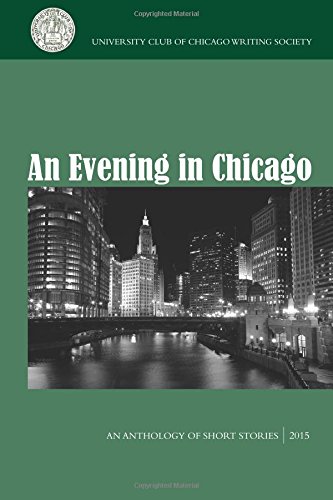
It took us five years but together we wrote a book: a collection of short stories all centering around an evening in Chicago. They are as varied as we are and in my not at all objective opinion, quite fun to read.

From the book description:

An evening in Chicago, among it's 2.7 million inhabitants, yields many stories - of love, lust, crime, tragedy, death, disillusionment, birth, fortune, reconciliation, revelation and hope. While these themes will be familiar to readers, many of the 14 stories in An Evening in Chicago, will introduce them to colorful characters and unusual circumstances outside the realm of everyday experience. All of these stories are set among the soaring skyline, beloved landmarks, colorful neighborhoods, and great lake that define Chicago. Written by the members of the University Club of Chicago Writing Society, these stories will enrich readers' insights into the city and its people and forever change their perspective of what can happen when the sun sets over Chicago.


The book is available at Amazon, and I have several copies piled up in the dining room. I will happily sell you a copy with a box of Girl Scout cookies.

The description alone makes me want to live in Chicago, thankfully I do. 

Tuesday, March 3, 2015

You're Never Too Old, Too Wacky, Too Wild...

We celebrated Dr. Suess's birthday today. The rhyming mad man would have been 111, had he not died in 1991. Silly and ridiculous, his books always make children laugh, because a "nooth gush on my toothbrush" is funny. We never read these when I was young. My friends had them, but there were no Dr. Suess books at my house. I was always intrigued, bright pictures and silly words still appealing to a third grader, when I first discovered them.

"The more that you read, the more things you will know. The more that you learn, the more places you'll go."
Dr. Seuss (I Can Read with My Eyes Shut)

Mary and Kate's grandmother sent them an entire set of Dr. Suess books when they were born. Perfect to read to the very young, we rhymed through Hop on Pop and One Fish Two Fish Red Fish Blue Fish, giggling as I flubbered "the ink he likes to drink is pink".

"Today you are You, that is truer than true. There is no one alive who is Youer than You."
Dr. Seuss (Happy Birthday to You!)

Last week I read Go Dog Go, Green Eggs and Ham, and Fox in Sox in the library at school. There are more than a few ways to really destroy "Tweetle Beetle Bottle Puddle Paddle Battle Muddle", done especially well when reading to big eared second grade students. And while I occasionally bore them with my history lessons hidden in children's books, Dr. Suess keeps those eyes and ears keenly tuned on the story.

"Unless someone like you cares a whole awful lot, nothing is going to get better. It's not".
Dr. Suess (The Lorax)


My favorite Dr. Suess book is his first, And To Think That I Saw It On Mulberry Street, originally rejected by up to 43 publishers. This rhyming reminder to value creativity and embrace imagination keeps me silly, keeps me writing, and tells a wonderful story, because an elephant and a sleigh are infinitely more interesting than a horse and a cart.

"And that is a story that no one can beat, When I say that I saw it on Mulberry Street."
Dr. Suess (And To Think That I Saw It On Mulberry Street)


You're never too old, too wacky, too wild, to pick up a book and read to a child.

Dr. Suess

Monday, October 27, 2014

A Gift to Call My Own

What should have taken about 20 minutes quickly stretched into an hour. The chance to run freely through a dimly light church sanctuary was irresistible, and the task at hand, selecting a gift tag from the altar tree, was sidelined en lieu of exploration.

Mary was immensely curious about all the candles, and the statue of Mary (the Mary, not my small one) looming over the candle area. Together we lit a candle and I talked to the girls about remembering those who have died. For my grandmother, a very old soul Catholic, the Virgin Mary was the mother of all and the one to whom you appealed for help in any situation. My Mary nodded, very focused and interested.

Mary knelt down and I stepped away, over to the tree but still in hearing distance of her quiet, church appropriate, voice. She blessed herself, "Father, Son, Holy Spirit, amen" crossing her chest from right to left.

"Hello Mary, this is Mary. For Christmas, could Mimi and Grandaddy come back from heaven, just maybe for the day? That would make my mom really happy. Thank you".

She stood quietly, blessed herself again, and then promptly threw one small leg over the top of the kneeling bench. Wiggling furiously she managed to get her entire body on top, as if on a grocery store mechanical horse. Grabbing one leg, I pulled her down, just before she rode her horse into row after row of lit candles. Sitting on the step, I then said my own blessing, for this child, for her kindness and her spirit; and for the circle of life that brought her to me. 


Originally written several years ago, when Mary was six, this was the perfect story to share after reading The 13th Gift, this month's From Left to Write book selection. A holiday memoir, writer Joanne Huist Smith shares how the kindness of others helped her family come together and celebrate Christmas, after suffering a great loss. Join From Left to Write on October 28th as we discuss The 13th Gift.  As a member I received a copy of the book for review purposes.


Wednesday, September 24, 2014

Banned Book Week, The Family Book


Three years ago, when I started working in the library at school, Jack delighted in calling me Tipper. Digging through books that had not been touched in 8 years, I tossed plenty that were out of date, out of touch and some, yes, that were inappropriate. Books on the hallucinogenic properties of mushrooms, written in 1974, did not fit in our growing elementary school library. The pictures scared me, the content was, at best, disturbing, and quite out of date.

It seems I am not the only Tipper in Illinois. Erie, on the far west border of the state, has decided that Todd Parr's The Family Book is not suitable for their grade school library. The happy text and bright colors, the beautiful messages found in all his books, are just not what the good people of Erie are looking for in their book collection. Todd Parr, it seems, is promoting the gay agenda by including these words in his book: some families have two moms or two dads.

Parents in Erie were perhaps concerned that exposing children to all kinds of family was not something that should happen at the grade school level, at least not in Erie. Which is then to assume that every family in Erie consists of two married heterosexuals, and a couple of children. There must not be any single parents or families with step parents and clearly there are no children living with grandparents. Maybe that is the case, I don't know, I've never been there.

And even though I've never been there, it doesn't mean I'm not curious about what I might find. Even if every family in Erie confirms to the rigor believed to be acceptable by the school board, families in the rest of the world do not. Someday children in Erie might leave, and come to Chicago, or further, having only known the strict definition of acceptable established in their hometown. 

Giving children the opportunity to see the world in every way teaches them understanding and compassion. And showing them diversity without labels takes away the different factor. The term gay is not used in our home, no more than we refer to ourselves as straight. The Family Book introduces the idea of two dads, or two moms, without assigning a name, without drawing attention to this idea being outside of what is considered normal. It's not the only one; We All Sing With the Same Voice, a beautiful song, now book, from Sesame Street, includes: "I have sisters one, two, three. In my family there's just me. I've got one daddy I've got two". And one of my favorite books, Everywhere Babies, includes in it's illustrations pictures of same sex parents right along with those of mixed sex parents, with no distinction or attention directed at either.

Making broccoli part of the meal, rather than a  weird looking side dish that they are forced to eat, helps children develop a taste for broccoli at a young age. We don't say "eat your vegetables", we say "eat your dinner". And liking broccoli does not mean you are going to grow up to be a vegetarian.

Wonderful Books

We All Sing With the Same Voice, J. Philip Miller, Sheppard M. Greene, Paul Meisel
Everywhere Babies, Susan Meyers and Marla Frazee
The Family Book, Todd Parr
Two Eggs, Please, Sarah Weeks and Betsy Lewin

In honor of Banned Book Week, re-posted from June 2012. 

Wednesday, August 27, 2014

12th Street and Vine

How we ever found this place is a mystery, located just south of the historic intersection at 12th Street and Vine, as is what logical thought went into making our way here, night after night, long after the more intelligent people had gone home.

Since 1930 musicians have gathered here, at the Mutual Musicians Foundation, on Friday and Saturday nights around midnight, after the regular gigs were over, to play together until the very early hours of the morning. The Foundation is on the east side of the city, an area not known for its low crime rate. We hosted my father's 60th birthday party at Arthur Bryant's, just down the street; the white suburbanites were in the cars and on their way home by sundown. Our night had just begun.

I'm going to Kansas City
Kansas City, here I come
Going to Kansas City 
Kansas Cit,y here I come
They got a crazy way of loving there 
And I'm gonna get me some

Thank heavens we had the good sense, at midnight, to never drive to the Foundation. Sadly we never had the good sense to realize that taxis, readily available in many parts of the city at midnight, are not too easy to come by at 4 a.m. when you want to go home, at least not at 18th and Vine. Fooled early on by rows of unmanned taxis parked in front we soon learned that they belonged to drivers sleeping at the transient hotel next door, who were not too interested in waking up to take us home. More than once we relied on the kindness of a departing musician to get us to a neighborhood that was at least semi awake.

I'm gonna be standing on the corner
12th Street and Vine
I'm gonna be standing on the corner
12th Street and Vine
With my Kansas City baby
And some Kansas City wine

They sell cans of Bud Lite for one dollar out of a blue Igloo cooler. The musicians rotate in and out of play, highlighting one then another, as seamlessly as if they played together always. The room is always warm, even in January, when it feels like a thick July night inside. The neighborhood, alive only hours earlier with sounds of jazz and smells of barbecue, is quiet now, save the music emanating from the old brick building on Highland. That guy, the one just walking in, has given up his search for a taxi and is going in to dance with his girlfriend, the one in pearls swaying to the saxophone solo. They are having the time of their lives. Thank goodness they weren't smart enough to go home with their friends, hours ago. Thank goodness there are still places like this, on the east side of Kansas City.

Well, I might take a plane, I might take a train
But if I have to walk I'm going there just the same
I'm going to Kansas City
Kansas City, here I come
They got some crazy little women there
And I'm gonna get me one.

Lyrics to Kansas City: Jerry Lieber and Mike Stoller

This post was inspired by 2 A.M. at the Cat's Pajamas, a completely original and engaging debut novel by Marie-Helen Bertino. I could have written about nine year old girls, or teachers, or love, or Philadelphia or the kindness of community, as this book is so full of options. I was provided with a complimentary copy for the purposes of this post, as a member of From Left to Write. Join us August 28th, 2014 when we discuss this book and our unique impressions from its many themes.


Wednesday, August 13, 2014

Under Magnolia (Not Next to BBQ)

It seems that whenever I try to put together the stories from my childhood, those that pile one on another in the ongoing, and sometimes dull, tale of me, there is no cohesive matter to string them together. What I get rather is a random, although heartfelt, journey through the people who conspired to shape my life. Not even my children, who profess to love me deeply, would be interested in making sense of this jumble of tales. It seems I have been forgetting the main character, the very place that gave me roots and home and history, the place where I lived those wonderful childhood years. Thankfully Frances Mayes, a far more gifted and accomplished writer, did not.

Under Magnolia, Mayes' beautiful history of her formative years, gives proper credit to the place that shaped in many ways the person she is today. Her words, paced to a slow southern drawl, create vivid images that are still somewhat murky with the heat of Georgia summers. Racing through the humidity soaked pages I ached for a sweet tea, unheard of in my northern home.

"Nothing about the South stirs me as much as the narcotizing fragrance of the land, jasmine, ginger lilies, gardenia, and honeysuckle blending, fetid and sweet", language that leaves no doubt as to what role Fitzgerald, Georgia played in her upbringing.  And while the South is the binder that holds these stories together, it is the characters, shaped in every possible way by home, that create the lovely story that slowly churns out like a lazy summer day; nothing compelling us to read beyond a curiosity for what might happen the next day. Frances Mayes writes a beautiful story of a childhood that wasn't always happy, and in no way perfect, but was every day very real. The voice, so clear, must harbor a bit of drawl she thought she had packed away years ago.

"In writing a life, you search for the white pebbles you didn't know your dropped to define your way."

Through Blogging for Books I received a review copy of this book.

Quotes from Frances Mayes, Under the Magnolia.

Monday, July 28, 2014

A Nice Little Place Down the Street

Once upon a time, when my day started with a quick run or a dog walk around the neighborhood, and every day was sunny but not too hot, I would occasionally stop at the ticket window to see if they had any of those $15 day of game bleacher tickets. And more often than not, certainly more often than I should have, I would buy one and spend my afternoon, not in my broom closet turned office doing work that I actually hated, but in the beautiful bleachers at Wrigley Field, with 3,000 others who also hated their job or were happily unemployed.*

My mornings no longer start with a run, the dog died, my job is not so bad and bleacher tickets cost over $50; I hardly spend anytime at Wrigley, a very nice place just down the street, my favorite place to be on a summer afternoon.

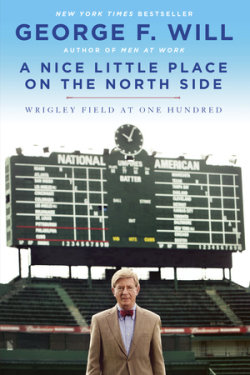
George Will shares my love of Wrigley, which he writes about in A Nice Little Place on the North Side. Will, conservative columnist and Cubs fan, ambles through the history of Wrigley Field with the pace of a lazy summer day. His anecdotal tour of Wrigley, and the Cubs, is a delightful and engaging read, the past easily building the story of modern day Wrigley.

Will, born a Cubs fan, covers not only the history of the ball park but how that history plays a key part in the Cubs consistently dismal summer standings. Only one other team in Major League Baseball is so closely tied to a stadium, and they seem to have figured out how to win, not so the Cubs. Is it true, that the beauty and experience of Wrigley, the friendly confines, contributes in part to the Cubs consistently lackluster performance? Will's writing is engaging and clever, and full of arcane stories that all come together to create a historical portrait of a beloved team playing in an equally beloved ballpark. Will's story is not just a birthday card, it's a delightful romp through one hundred years of baseball, Wrigley, Cubs and heartache.

Through Blogging for Books, I received a review copy of this book.

*See Elia's infamous tirade, "don't these people have jobs?"

Wednesday, July 23, 2014

Kate and Mary Read: Charlie and the Chocolate Factory

In the summer of reading, I have now enlisted my children to not only help with laundry, gardening and cooking but also writing. We all read the classic Charlie and the Chocolate Factory and over dinner, overwhelmed with their responses to my questioning in putting together thoughts on the book, I decided that they would write the essays for From Left to Write. Nine year old writing skills now far exceed nine year old cooking skills, but we're working on that.

Mary

As a five year old I always thought that getting everything would be nice, and that of course my mom and dad could, so then why wouldn't they? I saw kids my age at Target begging and screaming for a doll and they would get it. And when I tried this I got a time-out at home (and no doll). Now I am nine and by understanding the world a little better, I know that wanting (not to mention having) everything, would be a mistake of mine, for I would be bored, but most importantly I would not be a very good friend or person. In Charlie and the Chocolate Factory Veruca Salt is like this. In one part of the story she tells her parents that she wants an Oompa-Loompa and that she needs one, yet these Oompa-Loompas belong to Mr. Wonka (mother editor note, discuss owning versus working for with daughter writer). And after she screams and yells and whines they tell her maybe. So in conclusion I think that kids should get things only when they are nice about it and if it is something they need. Kids should never want everything.

Kate
After reading Roald Dahl's Charlie and the Chocolate Factory I found myself pondering a fact that I had not even thought about for a very long time: the fact that there is a gargantuan amount of children in the world that have living conditions much worse than mine. Many of these children would call something as simple as  flat screen TV a luxury and complain (actually they might not complain because they were used to it) of heat in the summer and being cold in the winter because they don't have air conditioning and heat. In my free time you'll probably find me relaxing on our back deck or deciding what to play with while rummaging through our big container of outdoor toys and sports equipment. I dont' realize how great it is that I have so many privileges very often, that is until Charlie Bucket pops into my mind again.

The other four lucky winners at Mr. Wonka's factory are described as greedy and spoiled children.  What do you think would happen if they switched places with Charlie Bucket? They probably never thought of kids like him. All four were too busy eating, chewing gum, watching television and and spoiling themselves to ever think of this. From now on I am going to try to think about this everyday.

 
My thoughts, beyond what a delightful and imaginative story this is, as enchanting now as it was when I read it so many years ago, lean to appreciation for fine lessons learned. I distinctly remember being horrified at the behavior of four of the five Golden Ticket winners when I was young; I'm happy to learn that my girls share my horror.


This post was inspired by the classic Charlie and the Chocolate Factory by Roald Dahl, which celebrates its 50th anniversary this year. To celebrate, Penguin Young Readers Group, in partnership with Dylan's Candy Bar, the world famous candy emporium, and First Book, a nonprofit social enterprise that provides books for children from low-income families, is launching a year long international celebration.

Head over to From Left to Write to learn how you and your child can have a chance to win the Golden Ticket Sweepstakes where the grand prize is a magical trip to New York City, plus much more! For every entry submitted Penguin Young Readers Group will make a donation to First Book. Then join From Left to Write on July 24th as we discuss Charlie and the Chocolate Factory. As a book club member I received a copy of the book for review purposes.


This post was inspired by the classic Charlie and the Chocolate Factory by Roald Dahl, which celebrates its 50th anniversary this year. To celebrate, Penguin Young Readers Group, in partnership with Dylan’s Candy Bar, the world-famous candy emporium, and First Book, a nonprofit social enterprise that provides books for children from low-income families, is launching a year-long international celebration.
Head over to From Left to Write to learn how you and your child can have a chance to win the Golden Ticket Sweepstakes where the grand prize is a magical trip to New York City plus much more! For every entry submitted, Penguin Young Readers Group will make a donation to First Book. Then, join From Left to Write on July 24 as we discuss Charlie and the Chocolate Factory. As a book club member, I received a copy of the book for review purposes.
- See more at: http://cupcakekellys.com/2014/07/22/charlie-chocolate-factory-ive-got-golden-ticket/#sthash.dbi3dT8o.dpuf

Tuesday, July 15, 2014

Kate and Mary Read

It will be the summer of reading. Last summer it was bicycles, riding for hours on end for the first time without the aid of additional wheels (quiet, they are city children, it took a bit longer), and the summer before that, the summer of France, on their first trip to one of my favorite countries. But this year, in what could have been the summer of soccer (although, now wrapped, their enchantment with the World Cup was too fleeting to define an entire summer), it is the summer of reading. It's nothing new, they have always been fond of books and stories but this year their lazy selves are lolling in bed some days until 11:00, waking and reading for hours before dragging themselves downstairs in search of food. They are building forts and finding nooks to house their afternoon habit; dirt and sand covered children crawling into the corners of our home, books in hand, to pick up where they left off that morning.

We have no complaints.

When they were born my cousin gave me a book, a big thick book, called "How to Raise Readers" or something like that. I thought this was genius and planned on reading it cover to cover as soon as I found time. I suspect it is still in the exact place on the shelf where I put it almost ten years ago, having never found the time to read about reading, choosing rather to actually just read. This lackadaisical approach seems to have worked.

We read together every night, the three of us. Last night we finished the first in The Penderwicks series, a book we all loved so much so that the next two books have just been ordered from my favorite used book seller. The girls, on their own, just finished Charlie and the Chocolate Factory, as did I, and we will all write reviews next week for From Left to Write, celebrating the 50th anniversary of this really terrific book. And now they will have their own space, NorthSideFour: Kate and Mary Read, because all this reading begets writing, and I'm most curious as to what they have to say. Nose buried in books, I haven't talked to them in days.


Monday, April 28, 2014

Free To Be Me, In Whatever Color I Choose

Three years ago I was completely befuddled by the gender assigned toy choices offered at McDonald's. Sent to buy food for a classroom celebration I had no idea that beyond choosing nuggets or burgers, I also had to assign to them gender specific, and hopefully correct, toys. I got it all wrong. The Gap makes it so much easier. No confusion at all when I walk in, boys clothing on the right, girls on the left, and please don't cross to the wrong side, simply not tolerated. Even my old workhorse L.L. Bean offers clear direction when shopping; Mary's flannel lined jeans are labeled boys because her flannel is primary colored, the girl's version being lined with a soon to fade pastel plaid. Pass.

McDonald's has recently agreed, at the urging of a determined teenager, that there need not be a distinction of boy toy or girl toy. Wonderful news! Now, while feeding our children processed and unhealthy food we need not force feed them gender stereotypes; who wouldn't see that as a victory? The comments associated with the article say otherwise. Ranging from " I'm gonna puke" to "This is a bunch of crap", the general consensus is that this type of effort to invoke change was unnecessary and a complete waste of time when far more pressing issues, say poverty and lack of freedoms, should be the focus. A curious issue to raise when the matter at hand is offering a child the freedom to choose the toy that they like best, without regard to what McDonald's has deemed acceptable, based on their sex.

For my part I applaud anyone who takes a stand and, beyond complaining (which is what I did when faced with this insanity), actually does something to make change happen. It seems there are those who feel that asking a mega corporation to stop pushing gender stereotypes onto our children is an inconsequential use of time, or that by not qualifying toys based on sex we are somehow creating confusion in our children. Because it is certain, if we don't level with them now, if we are not clear in directing girls to play with Barbies and boys to play with trucks (or the non toy video game level equivalent of which I know absolutely nothing about) then our children will grow up not knowing which way to turn when they walk into the Gap. If we don't tell them, how will they know?

Don't Dress Your Cat in an Apron


Although I must tell you his favorite toy
Is a little play stove with pans and with pots,
Which he really must like, 'cause he plays with it lots,
So perhaps he's a girl -- which kind of makes sense,
Since he can't throw a ball and he can't climb a fence,
But neither can dad -- and I know he's a man,
And mom is a woman and she drives a van.
Maybe the problem is in trying to tell
Just what someone is by what she does well?
Read more at http://www.songlyrics.com/marlo-thomas/my-dog-is-a-plumber-lyrics/#J4G2F561lJSqKFMK.99
My dog is a plumber. He must be a boy,
Although I must tell you his favorite toy
Is a little play stove with pans and with pots,
Which he really must like, 'cause he plays with it lots,
So perhaps he's a girl -- which kind of makes sense,
Since he can't throw a ball and he can't climb a fence,
But neither can dad -- and I know he's a man,
And mom is a woman and she drives a van.
Maybe the problem is in trying to tell
Just what someone is by what she does well?
Read more at http://www.songlyrics.com/marlo-thomas/my-dog-is-a-plumber-lyrics/#J4G2F561lJSqKFMK.99
My dog is a plumber. He must be a boy,
Although I must tell you his favorite toy
Is a little play stove with pans and with pots,
Which he really must like, 'cause he plays with it lots,
So perhaps he's a girl -- which kind of makes sense,
Since he can't throw a ball and he can't climb a fence,
But neither can dad -- and I know he's a man,
And mom is a woman and she drives a van.
Maybe the problem is in trying to tell
Just what someone is by what she does well?
Read more at http://www.songlyrics.com/marlo-thomas/my-dog-is-a-plumber-lyrics/#J4G2F561lJSqKFMK.99
Don't dress your cat in an apron
Just 'cause he's learning to bake.
Don't put your horse in a nightgown
Just 'cause he can't stay awake.
Don't dress your snake in a muu-muu
Just 'cause he's off on a cruise.
Don't dress your whale in galoshes
If she really prefers overshoes.
A person should wear what he wants to
And not just what other folks say.
A person should do what he likes to -
A person's a person that way.

-Dan Greenburg
 
Don't Dress Your Cat in an Apron, from the still wonderful Free to Be You and Me, which I love now as much as I did when it first came out in 1974. Created by Marlo Thomas who was shocked to find that books for children reinforced stereotypes of what boys and girls were supposed to be, she set out to put together a book that taught children they could be whatever they wanted. Sadly those pink and blue lessons still dominate much of what is published for children today, Free to Be You and Me still necessary, and enjoyed, after all these years.

Monday, March 17, 2014

Who Judged a Book By It's Cover? Me.

"This book wasn't as good as it's cover."

Oh yes, the never ending story of a 8 year old girl who insists on choosing books with shiny covers full of pink, with a title announced in poofy letters and a cover picture which must include a girl in a short skirt, around 10 years old, who appears to be in some sort of quandary. Extra points for crowns and promises of princesses within.

"Did you read the first few pages, or the inside cover, before you checked it out?", although I know that she did not. She is not alone; children want books that appear new, with brightly colored covers, titles that scream at them and pictures that promise girl related drama or bodily functions. Publishers deliver, shelves are stocked with Junie B.Jones and Captain Underpants. And it's not just the third grade, pre-school boys are wild about finding pictures of toilets in books, while the four year old girls refuse to open anything that is not part of the Pinkalicious family of books.

No Henry Huggins, no Frog and Toad, no Lyle, all sadly regulated to the back of the shelf thanks to their simple covers and stories markedly absent of potty sounds and characters who only wear pink clothing. Charlotte's Web, only saved from certain extinction by having been made into a movie more than once, gathers less dust than than Superfudge. Put that pig in a pink gown and sparkly crown and you've got yourself a bestseller.

Don't judge a book by it's cover? Remind me of that next time you see me wine shopping, I'm drawn to labels with good graphics, or ones that look so distant and intriguing I am certain that the wine inside must be wonderful. You'll know me by the husband following close behind, reviewing each choice, and regulating most to the "ally" section of the wine cabinet.

But books? The horror. Generally I don't buy books online. I prefer my local book shop where I can spend hours going over each and every one that interests me, reading the inside cover and making decisions based on content and story, not just the flashy picture on the cover; I will not be fooled by flashy covers. Usually.

This book arrived in the mail, sent to me from the publisher for review purposes. Yuck. The cover was all wrong; it screamed pink and the font was messy. I wasn't going to like it but I had agreed to read it, and so it went into the "need to read" queue. Days later, having found it's way to the top, I read the first page, and then the second. Written in a series of emails, memos, court documents, letters and statutes, it's easy to flip from one page to the next, and difficult to put down. The story unfolds from the documents, each one (save the necessary statutes), written in a very smart, and unique, voice. The characters become real in their own words, not by lecture from the writer.

After years of reminding children to look inside before making a decision, I have, perhaps, learned my own lesson. Sometimes wonderful, thought provoking and smart stories can be hidden behind screaming pink covers, when you just take the time to look inside.

That said, it's still the label on the front of the bottle that gets me, every time.

This post was inspired by the novel The Divorce Papers by Susan Rieger. Young lawyer Sophie unwillingly takes her first divorce case with and entertaining and volatile client in this novel told through correspondence and legal documents. Join From Left to Write on March 18th as we discuss The Divorce Papers. As a member, I received a copy of the book for review purposes.


* If you enjoy reading books written in the epistolary style, I encourage you to read 84, Charing Cross Road, a wonderful way to spend a few hours.


Monday, February 17, 2014

From My Side of the Gate

This post was inspired by the novel Prayers for the Stolen by Jennifer Clement, the story of one girl, her mother and friends, surviving in rural Mexico. It is a choppy story, reflecting the life lived by these women, so far from the Mexico advertised in the United States. Join From Left to Write on February 18th as we discuss Prayers for the Stolen. As a member I received a copy of the book for review purposes.

There were two girls on the other side of the gate who appeared to be about my age. We stood and looked at each other for a few minutes, smiling and waving. My grandmother appeared behind me and suggested that I come back inside, it was time for dinner. Not at all hungry, I wanted to go out and play with these girls. She waved them on but I held firm, I wanted to be on the other side. At five my Spanish was limited to hello, thank you, please, and a few food items. I tried them all, certainly saying something as interesting as "me gusta el taco", the girls giggled, and said something back, which, having no idea what they were saying, made me giggle. Soon enough all three of us were laughing; Mimi went to find the cook.

Every year my grandparents left in mid January. Knowing I wouldn't see them for weeks, I spent the night before they left at their house, helping pack and leaving little notes in their luggage, the black and white patterned Samsonite with the bright orange lining. A week earlier my grandfather had brought them down from the attic so that, even though she took the exact same clothes each year, Mimi could start the packing and organizing required for a month away from home.

Three weeks later Dad and I went to the grocery store for milk, eggs, bacon, bread and these truly sweet sticky buns my grandfather liked, stocking the refrigerator for their return. The next morning we were on a plane, to be greeted four hours later in sunshine by my grandfather, relaxed and tan, driving the old orange Volkswagen thing that I thought was the most exciting car ever made. Dad took over and drove us home, Bopaw in the front seat smoking a cigarette and filling us in on what had happened in the year that we had been away. Mom and I rode in the back, my hair flying, her screams muffled by the roar of the open air car as it raced along the malecon.

Mona was still alive, and still horribly unpleasant. She patrolled the beautiful jardin, never beyond the fence for fear that she would bite someone. Only Paulino went in, to feed her, and take care of the flowers. The roosters next door had not made it to a stockpot yet and were still the very early morning wake up call for the entire block. Julia was making pork roast tonight, in honor of Dad's arrival, and papas fritas for me. The Testerman's were coming tomorrow for dinner, Mimi was having a party for their Kansas City friends on Saturday.

We bounced along the cobblestones and up the steep hills in town, Mom alternating between screeching in terror and joy as we passed her favorite shops: cute pink sandals outside Letty's competing for attention with a burro who wandered into our path. When we rounded the corner and stopped at the end of the road I could smell the papas fritas; Mimi's face inside the gate settled it, I was home, at least for a short time.

One week to sleep in the mosquito netting, to bury myself in the sand at El Dorado, to drink fresh squeezed orange juice every morning and to beg my Dad to carry me back up the hill after a trip down to Bing's for pineapple ice cream. One week to spend with the four people I loved the most in the world, in the place I waited all year to be, Mexico.

And then, at the end, as I knew would happen each year, I said goodbye to my parents and got on a plane with my grandparents for the trip home. Mom and Dad just at the start of their Mexican time, a month of friends and parties and sunburns in front of them, while I was headed to snow and school and heartache, leaving my parents never easy, and my leaving was never easy for Dad. Waking the next morning to the sticky rolls we bought just a week earlier made him closer, even though I knew he was very far away.


My grandmother returned with Julia who talked to the girls for a minute and then turned to Mimi and me. In the end they allowed me outside, but only for a few minutes, long enough to take a picture and let me run to the end of the street and back. At five I had not yet learned that I wasn't supposed to be friends with the people who stood on the other side of the gate.

Monday, February 3, 2014

On My Shelf, Olive Kitteridge

The majority of what I read is dictated by outside sources. This in no way slows my need to buy books but they accumulate in stacks around our apartment, waiting patiently to be read. My husband cringes with every single addition, so certain that we are sinking into the frozen Chicago tundra below.

First on the list, books my girls read in class, to better understand what they are studying, enabling me to discuss the details of Peak's relationship with his father (Peak, by Roland Smith). Earlier this year they read Flipped, by Wendelin Van Draanen, a book I love, a book I highly recommend, as do the girls. Flipped is a wonderful jumping off place for discussions about perspective and seeing the world from another point of view.

I read books for the online book review group From Left to Write, books that are mailed to me from the publisher, my choice from two options. Next up, Prayers for the Stolen, by Jennifer Clement. Book review date is February 18th, and while I am only a few chapters in, it's an interesting and quirky book about, thus far, childhood in Mexico. Given that I stretch my biography to include a Mexican childhood, I'm fascinated.

Over break I read Eleanor and Park (Rainbow Rowell), Aristotle and Dante Discover the Secrets of the Universe (Benjamin Alire Saenz), and The Fault in Our Stars (John Green), all in an effort to keep up with the young adult books being checked out by the students at my day job, the volunteer librarian gig. If this is what is being written for, and read by, students, things are looking up. 

Last week I had exhausted my stash of obligatory book selections. Next to my bed, where it has been for over one year, sat Olive Kitteridge, (Elizabeth Strout), a book handed to me by my wonderful aunt whose opinion on books, and all matters, I respect greatly. Passages of this book were used to discuss character development in my writing group where one member, now my favorite person around the table, suggested that my writing style is similar to Elizabeth Strout's. Having only read one small part of the story, I had no idea what high praise this was. The book was begging to be read.

My children are learning to write in their fourth grade language arts class. They are being taught to build to a conflict and then work to find a resolution in their stories. They are nine and learning to use language to describe everyday events within a constricting framework, designed to teach them how to effectively tell a story. At nine they need the guidelines, the structure, to compel a reader to continue.  Elizabeth Strout sailed through this part of fourth grade and found her voice, not in the conflict, but in the words and story, with no need to tell us more than what happens in this small town on the coast of Maine, on any given day. I emailed the teacher, "can you teach my children to write like this?".

Olive Kitteridge is now forever one of my favorite characters, I miss her terribly even though I don't think I cared for her very much. Best to read it now, HBO pictures has a mini series in the works, Olive Kitteridge brought to life. I'll watch, just to check in, but I think I like her best in my head, as I see her, as Elizabeth Strout drew her so beautifully for me.

Included are several links to Amazon for the books referenced, my feeling being that Amazon is a wonderful resource for reading about and discovering new books. That said, I encourage all to  support local booksellers whenever possible, after you do your Amazon research.


Thursday, August 22, 2013

Fear is a Factor

Several months ago, while wandering the aisles at my favorite used book store, I came upon a stash of Agatha Christie books. Immediately I scooped up four of them and have been on the lockout for others ever since. I'd forgotten how much I loved her books, how much I loved hiding away in my room, safe on the second floor with my parents down below, as I read story after story of Jane Marple or of Hercule Poroit. Miss Marple was my favorite, her tottering self so sharp and so far ahead of me as I struggled to piece together the clues that were so obvious to the seemingly ancient detective.

Those lovely books are gathering dust on the shelf in the guest room; I'm afraid to read them. I haven't watched one Law & Order rerun all summer, scary movies are not even mentioned and sadly, the local news is proving to be a bit too much. Small towns terrify me.

This summer, for the first time, the girls and I are spending most of our days, and nights, in our favorite Michigan beach town, a charming, and small, spot on the water with a population that swells to less than 10,000 during the summer. Terrifying.

Jack assures me that absolutely nothing happens here. My neurotic checking of online data shows that this is simply not true; just last week some poor man was stopped for a minor traffic violation (specifics not revealed to protect the offender) just blocks from our house. I am fairly certain that I remember hearing the sirens on that fateful day, quite possible in that the only other audible sound for blocks was my children screaming at each other over the badminton net in the back yard. Also a possibility, me screaming at my children to lower their voices so as not to disturb our quiet neighborhood.

This is the problem, it's a little too quiet here. Also, very dark. Maybe one or the other but together, scary. We don't have quiet in Chicago, and we certainly don't have dark.  Last week the girls and I drove home around 9:30 pm after dropping Jack at the train. We passed one car. I cannot remember the last time I went outside in Chicago and didn't see another soul. In a city where the rising crime rate consistently makes national headlines, where the idiots in the neighborhood think shooting at each other is just as acceptable as yelling insults from car windows, I feel safe. Er.

It's been over twenty years since I lived on the ground floor of anything; for 20 years I have lived in a world where access to one of our windows required a ladder or climbing equipment. Our bedroom window in Chicago faces a brick wall. The only people that can see in any of our windows are the Vietnamese couple whose kitchen sits about one arm's length from the dining room windows. Watching Mrs. Pham putter around her kitchen is comforting, I open our windows to smell the fish sauce and garlic and wave when she looks up from her chopping. The entire world, or almost 10,000 of them, can see in the windows when we are in Michigan. You know what is outside the dining room window there? Darkness. Scads and scads of dark, as far as you cannot see.
 
It's back to reality next week, home to the familiar paranoia of living in the city and away from the comfortable horror of living with open windows and unlocked doors. Several days ago, not far from our apartment in Chicago, five people were shot when a few gang geniuses got confused about which side of the street they were allowed to stand on, or something equally important. That should be terrifying but sadly it's not, it's home. Nothing Miss Marple faces could scare me more than that.


Wednesday, August 7, 2013

Our Reading Promise

Once I had brushed my teeth and said a prayer, I climbed into the huge old Victorian bed, the same one she had slept in as a child, and waited while my grandmother found the book we were reading. She climbed in next to me, we pulled up the Little Red Riding Hood sheets, and she read. We read Anne of Greene Gables, The Magic Bed Knob, Mary Poppins, The Secret Garden, Tom Sawyer, The Borrowers and my very favorite,  Heidi. We read from an old copy of Hans Christian Andersen's Fairy Tales, my grandmother patiently reading "The Little Match Girl" over and over because it was always my first choice. When we had finished a book she told me stories of "Cuddles and Tucky", a series that ran in the Kansas City paper before I was born, adventures of a brother and sister. I remember thinking how amazing she was, to remember all those stories and now, as an adult, I know just how amazing she was, creating her own stories as we lay there in that big huge bed. While the stories we read are now amongst my favorites, what I remember most is how much I loved curling up next to her each night when she read, and knowing now that she took that time, every night, to be with just me. Whenever I stayed at my grandparents' house, my grandmother read to me before I fell asleep in my big old bed.

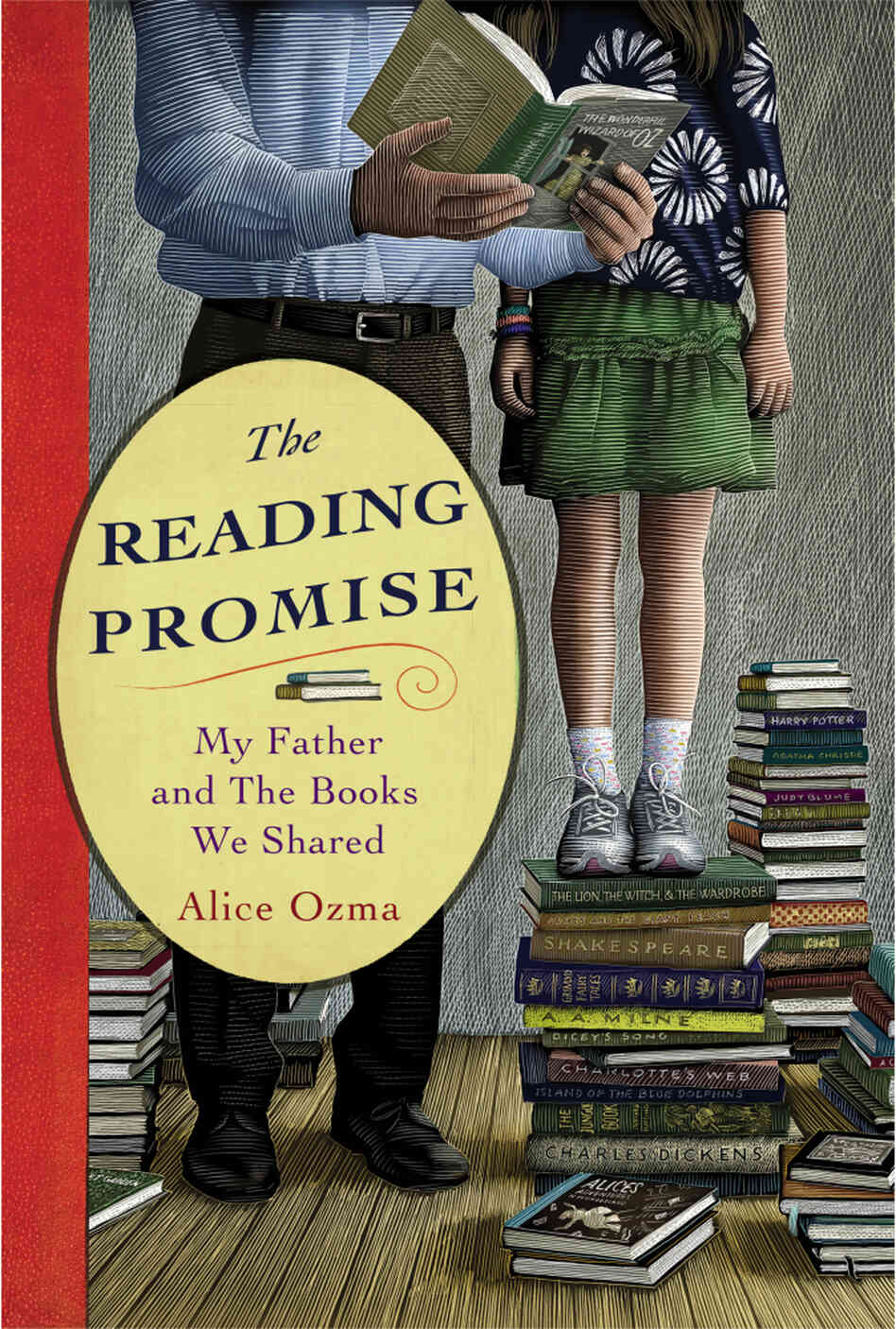
Last summer Jack gave me a copy of The Reading Promise (Alice Ozma),  a beautifully written memoir of one girl's promise she shared with her father: to read together every night until she left for college. It was clear from the start that I was going to love this book. Her single father is a librarian, one who eventually looses his job to the reorganization of his school; the years of accumulated books packed into boxes to make way for computers, an idea that gives me nightmares. As a daughter who lost her father much too soon, a mother who cherishes her nightly reading time, and a librarian who loves her job so much she volunteers, The Reading Promise was clearly one of the best selections Jack had ever made.

Last summer we made our own reading promise. We've been loose when necessary, a quick poem or two when homework, or exhaustion, kept us all up too late. We read every holiday picture book we own in the month of December, rather than bury ourselves in a novel that would take us away from The Elves and the Shoemaker or  The Tailor of Gloucester. We've made choices together, spending hours in our local bookstore scouring possibilities, and we've relied on my memory, somewhat. Knowing that one of the best books I read as a child involved a boy, New Jersey and fireworks, but unable to remember the title, I Googled those key words and discovered Henry Reed, Inc., by Keith Robertson. My memory is good, the series, of which we have now read three, is one of the best I know. They are still funny and wonderful and books to read in summer, as they all take place over summer vacation, and involve nothing more than the mishaps and quiet adventures of Henry and his friend Midge. There's no magic, no great adventure, just a boy, his dog and a cat sent up in the air in a weather balloon.

We've passed the one year mark with no end in sight. Of course I know that someday, in a time I am not now equipped to consider, our streak will end, as did Alice's. Their final read, huddled together in a stairwell of her college dormitory, was one that, even now, one year later, makes me weepy. Thankfully the beautiful story that led to the end was well worth the tissues required.

"Reading to someone is an act of love. This book is, above all else, a love story." -Alice Ozma

Our Reading Promise, Thus Far


Junonia, Henke
Nancy Drew, Keane
  The Secret of the Old Clock 
   The Hidden Staircase
   The Bungalow Mystery
   The Mystery at Lilac Inn
   The Secret at Shadow Ranch
   The Secret of Red Gate Farm
   The Clue in the Diary

   Nancy's Mysterious Letter
The Borrowers, Norton
Mary Poppins, Travers
Once Upon a Small Town, Mooy
A Christmas Memory, Capote
The Great Brain, Fitzgerald
Harriet the Spy, Fitzhugh
Secrets at Sea, Peck
The Journal of Finn Reardon, Bartoletti
Charlotte in Paris, Knight
Pollyanna, Porter
Henry Reed Inc., Robertson
Henry Reed's Journey, Robertson
Henry Reed's Babysitting Service, Robertson
From the Mixed Up Files of Mrs. Basil E. Frankweiler, Konigsburg
The Secret Garden, Burnett
Betsy-Tacy, Lovelace

"If a child sees something in a parent that the child aspires to, he or she will copy that parent and be content. If children feel that a parent is living a life that shows compassion and understanding, patience and love, that child will not have to reach a stage of rebellion against that parent. Why rebel against someone who has listened to you and wants to help you fulfill your dreams? A parent who has proven time and again that the growth and happiness of his or her children is priority number one does not have to worry about where those children are heading in life. They will be sensitive and productive members of society for as long as they live." -Jim Brozina (Alice's Dad)

All that and I get to curl up and end my day with the best people I know, even on days when they have made me absolutely crazy, and I them? There is no greater way to say goodnight.


Monday, October 15, 2012

One More Good Guy in a Bears Jersey

Despite our best efforts to check before we get out, we have left quite a few things in taxis over the years. This summer Mary left a bag containing two blown glass bugs that we had just purchased at an art fair, a huge loss considering they were handmade and very one of a kind. Her beloved doll Molly lost a fine pair of shoes a few months ago when she apparently kicked them off on the short ride downtown, to lunch at the American Girl store, and then had to suffer the indignity of lunch without shoes. A few years ago Mary left her brand new hand me down purse, a sassy red and white gingham sized just for her, in the back seat when we got out for dinner. The biggest lost there, other than my purse, was the treasures she had stored inside: a bracelet she made with buttons, an acorn from Michigan and a coin purse brought home from France by Uncle Ed. As always we hoped that the driver might find the purse and stop back at the restaurant where he dropped us, but he did not. It seems that what stays in the taxi, well, stays in the taxi.

But not always. Last week a man appeared in the library, a gruff looking guy wearing jeans and a Bears jersey. He smelled like smoke and looked like he was about to yell at me.

"Are you the librarian?"
"I am".
He handed me a book.
"I dropped off two kids here this morning, I think one of them left this in the back of my taxi".
"Really?"
"What? Is that a problem?"


No sir, no problem at all, something much more like shock, and gratitude.


It's a scramble each spring, a wild hunt for each overdue book, in hopes or reclaiming every one before the school year ends. Children transfer or move away, and their books go with them. Some just don't bother to return them, for reasons I will never understand.

My message is very clear: having a library is a privilege and these books are here for everyone. If you take a book and don't return it, you are preventing your friends from enjoying that book. Libraries provide a wonderful lesson in community and sharing, in responsibility, and in taking care of things that belong not just to one but to all.

Great thanks to the stranger who took the time to do what so many do not, return a library book. What a decent guy.


Friday, June 29, 2012

Trapped on a Full Train with Pierre, Mary and Maurice Sendak

Beep beep.

Your attention please. Your train has been delayed while the conductor steps off momentarily. We thank you for your patience.

It was 101 degrees in Chicago and only slightly cooler in the subterranean tunnel where our red line train was delayed, stuck between two stations, which ones I had no idea as I had paid no attention to where we were. I looked to Jack, across the crowded aisle, sitting with Kate, who only shrugged his shoulders.

"I have never heard this message before. The conductor got off the train? For what, a cigarette?"

The woman across from me smiled knowingly, "oh this happens all the time, really."

Really? To remove a dead body from the tracks? Or maybe to pick up some treasure he'd hidden down here, in the bowels of the city? Perhaps he was lost and stopped to ask for directions?

"No need to worry, when you ride the train all the time, as I do, these things happen", said the local.

When you ride the train all the time, as I do, the conductor stays on the train and moves me from station to station, without being told to do so. While not quite the Titanic, I still felt like maybe this guy was supposed to go down with the ship. Why leave us all here to melt in this deeply buried tunnel of malodorous humanity?

The train did not move. Usually these automated messages are followed with "your train will be moving shortly" but this one offered no such reassurance. I looked around at the 400 or so others crammed into the stuffy train car,; all in various stages of decomposition, and smell, we were a mass of sweltering bodies trapped underground on a red line train going nowhere.

But this is not a story about my paranoia, or age related claustrophobic tendencies. It's a story about Mary, Maurice Sendak and wonderful books.

After three or four minutes my cool exterior was wilting. Mary, sitting next to me, reached into my bag and dug out one of two books she knows she will always find in my bag: Pierre, by Maurice Sendak. When I began to read she said, "no Mom, let me read to you this time", and she began.


Soon she was reading, not from the pages of the well worn book, but from memory, reciting the words that had been read to her over and over, from the story that has been in my bag, next to Sendak's Chicken Soup with Rice, for as long as she knows. For years, when faced with a tired child or a long delay, anything that required a distraction from the sometimes much too big world around them, I brought out the books and we would retreat, for just a while, into Sendak's world, which proved to be a constant and comforting place to be. As it still does, for a mom growing quite nervous, abandoned in an hot and dark subway.


The moral of Pierre's story is to care; Maurice Sendak's, to create, and mine, to read to your children, because someday they might just read to you.


Pierre, A Continuous Tale, by Maurice Sendak
Chicken Soup with Rice, by Maurice Sendak

Saturday, June 9, 2012

The Family Book, in Our Library

Three years ago, when I started working in the library at school, Jack delighted in calling me Tipper. Digging through books that had not been touched in 8 years, I tossed plenty that were out of date, out of touch and some, yes, that were inappropriate. Books on the hallucinogenic properties of mushrooms, written in 1974, did not fit in our growing elementary school library. The pictures scared me, the content was, at best, disturbing, and quite out of date.

It seems I am not the only Tipper in Illinois. Erie, on the far west border of the state, has decided that Todd Parr's The Family Book is not suitable for their grade school library. The happy text and bright colors, the beautiful messages found in all his books, are just not what the good people of Erie are looking for in their book collection. Todd Parr, it seems, is promoting the gay agenda by including these words in his book: some families have two moms or two dads.

Parents in Erie were perhaps concerned that exposing children to all kinds of family was not something that should happen at the grade school level, at least not in Erie. Which is then to assume that every family in Erie consists of two married heterosexuals, and a couple of children. There must not be any single parents or families with step parents and clearly there are no children living with grandparents. Maybe that is the case, I don't know, I've never been there.

And even though I've never been there, it doesn't mean I'm not curious about what I might find. Even if every family in Erie confirms to the rigor believed to be acceptable by the school board, families in the rest of the world do not. Someday children in Erie might leave, and come to Chicago, or further, having only known the strict definition of acceptable established in their hometown. 

Giving children the opportunity to see the world in every way teaches them understanding and compassion. And showing them diversity without labels takes away the different factor. The term gay is not used in our home, no more than we refer to ourselves as straight. The Family Book introduces the idea of two dads, or two moms, without assigning a name, without drawing attention to this idea being outside of what is considered normal. It's not the only one; We All Sing With the Same Voice, a beautiful song, now book, from Sesame Street, includes: "I have sisters one, two, three. In my family there's just me. I've got one daddy I've got two". And one of my favorite books, Everywhere Babies, includes in it's illustrations pictures of same sex parents right along with those of mixed sex parents, with no distinction or attention directed at either.

Making broccoli part of the meal, rather than a  weird looking side dish that they are forced to eat, helps children develop a taste for broccoli at a young age. We don't say "eat your vegetables", we say "eat your dinner". And liking broccoli does not mean you are going to grow up to be a vegetarian.

Wonderful Books

We All Sing With the Same Voice, J. Philip Miller, Sheppard M. Greene, Paul Meisel
Everywhere Babies, Susan Meyers and Marla Frazee
The Family Book, Todd Parr
Two Eggs, Please, Sarah Weeks and Betsy Lewin

LinkWithin

Related Posts with Thumbnails